Alfred Hitchcock is a master of suspense when it comes to film. In his 1958 film “Vertigo”, Hitchcock utilizes many tools of suspense to enhance the viewing experience. For example, color and the score play huge roles in the films suspense aspect. The score is perfectly placed in scenes of ample importance regarding the suspenseful aspect of the movie to match that suspenseful feeling. This really helps correctly delineate the emotion in the film to the viewer. Hitchcock also uses intense colors and lots of it to symbolize emotion in the film. For instance, red for love and intensity and green for the opposite emotional effects. The viewer begins to relate certain colors to certain characters and places in the film, which helps enhance the emotional response the viewer has to the color in moments of suspense throughout the film. There is a scene when Scotty is having a sort of mental breakdown/realization, and Hitchcock chose to tint the entire screen blue during this scene. The blue represents his sadness and confusion in this moment. Aside from color, etc. Hitchcock uses camera camera angle to portray suspense as well. It is shown early in in the film that Scotty has contracted a fear of heights that is accompanied by the side effect vertigo. To show the suspenseful moments where Scotty must face his phobia, Hitchcock uses extreme angles to portray extreme height in the film. All together, Hitchcock’s film “Vertigo” was revered for being of great suspense, and he made sure that every viewer felt the suspense in the film by implementing specific cinema techniques to do so. Ultimately crafting one of the greater films to ever have been created.
Category: Uncategorized
The Complexity of The War Film Genre
What is the draw of war films? Why is it such a popular genre?
War films draw audiences that for the most part love action and drama. The war film genre is indeed a hybrid between drama, thriller, and action movies. It draws in those who like to see a little blood and gore in movies, those who want to see the sadness and drama of war on the big screen, and a lot of the time people who just like to watch quality films. Because really when it comes down to it, there are some very good overall films in the genre of war that have been critically acclaimed. With that being said, their are also quite a few poor war films, but that can be said for every genre of film. There is something about war that galvanizes people, whether it be the power of war, or the effect it has had on the vast majority of human beings. War has either directly effected some people, or it represents a powerful entity that many could only dream of experiencing. Film can be used as an outlet for these people who can only imagine war as well as those who know war all too well. I believe this is why the genre is so popular, regardless of how skewed the depiction of war may be on the screen, film allows people to in other words “experience” the most formidable of human experiences, war. There is a certain power of depiction in film, and the genre of war has proven to be a phenomenal vessel for this power of depiction.
Lost In Translation (Production v. Screenplay)
It is a fact in cinema that original screenplays most often vary from the film itself, or the screenplay’s portrayal onto the screen. The film “Lost in Translation” (2003), is a phenomenal example of this. I would like to take a look at three different scenes from the movie and compare the scene to itself as it was written in the screenplay.
First, I’d like to take a look at the scene where the prostitute is sent to Bob’s room. This scene overall is a very awkward scene for the viewer. In the film, the prostitute enters Bob’s room and explains that she was sent by Mr. Kazuzo. She then proceeds to pursue Bob, and try to get him to rip her stockings. However, Bob cannot understand her for quite some time and when he finally does, the woman produces a fake struggle. This is what produces the awkwardness, as the woman attempt to wrestle Bob onto the floor. In the screenplay, there are subtle differences that highlight the idea of improvision and not producing a film that is indeed the script verbatim. For example, in the script, the woman first approaches the stereo to put on a song…then she is successful in getting Bob (who first entertains the idea of the event) onto the bed. In the film, there is nothing involving a stereo and Bob never reaches the bed with the woman as he has no intention to be sexual with her at any point. On the other hand, the dialogue is pretty spot on from the screenplay to the film.
Second, is the scene when Bob and Charlotte see each other at the bar after Bob has had his photoshoot, as he is still in his tuxedo from the photoshoot. In the movie, we see Charlotte approach, Bob, as she is clearly uninterested in what is happening with her party of people. Rather than approach and conversate with Bob as the film portrays, the screenplay simple has the two smile at each other before the scene ends, and nothing else happens. This shows that the director belived that during production, this scene required more dialogue due to the scenes possible importance, rather than just a smiling glance.
Lastly, there is a scene in the script that is completely cut from the movie. In the movie there is a scene when Bob is swimming in the hotel pool. In the film, there is no dialogue and it only shows a group of people doing water arobics. This is really all the film shows regarding “the pool”. In the screenplay however, Charlotte is the one swimming, she runs into Bob (on his way to the pool). The two then partake in small talk before Charlotte invites Bob out to a party with some of her friends that night. The two do eventually go to a party later in the film and there is a scene simialr to this one in the screenplay. However, it is interesting to see that after the writing of the script, the director decided to place a similar dialogue elsewhere and take out a scene from the screenplay altogether. It just goes to show that no script is set in stone and that a film in its process is ever evolving. This is one of the components of film making that makes the process so unique.
“There Will Be Blood”
In this film, we see an interesting and complicated relationship between Daniel Plainview and his adopted son H.W. And yes, there is indeed a strong relationship between these two in the film. It is made clear that Daniel uses his relationship with H.W. as a façade in order to establish a reaction of pathos from those he wishes to acquire land from. However, it is in these situations that the two are able to bond and regardless of Daniel using H.W. as a tool, I truly believe that Daniel sees H.W. as a biological son whom he feels genuine love for. This love does deteriorate once H.W. loses his ability to hear. With Daniel unable to properly communicate with his son, it frustrates him and distances the two from each other. On a superficial level, Daniel can no longer manipulate H.W.’s image, but he also feels as if he find it harder to view him as truly his son.
On the issue of Daniel v. Eli, the conflict is very complicated. These two characters feud throughout the entirety of the film, ultimately ending with Daniel murdering Eli. Daniel’s capitalist views and endeavors in the film bump heads with the religious endeavors of Eli. However, Eli does sin by being drawn into the capitalist mindset. Eli is adamant on receiving money owed to him from Daniel in many scenes in the film. This ends up being his downfall as he is confronted for his sins and his hypocrisy by Daniel. The connection to the capitalist world these two have is what makes them more similar than different, and also becomes the root of both of their demises.
Branching off of this point, Daniel can be seen as a vessel for American Capitalism. Early in the film we see Daniels determination and inspirational perseverance to create a good life for himself through the discovery of gold and oil. This is indicative of the resilience of America to always seek out progression. This attitude is what gives the Capitalist spirit its charming qualities. However, in Daniels’s later life we see how dismal and mentally unstable his life of capitalist progression has left him. His relationships have made a turn for the worst, he is an alcoholic, and he has completely isolated himself from the rest of society. The film is showing us the worst aspects of the capitalist spirit. Daniel is used as a symbol for this lifestyle completely taking over an individual and ultimately making life miserable all for the sake of greed.
“Boyhood” Refection Questions
- What part of Mason Jr.’s life did I find most relatable to mine and why? I found the societal aspects of Mason’s life such as the interactions he has with friends and people at parties and school etc. I found myself thinking that many of these interactions that he had were very similar to my own I had back in high school and I thought that it was cool how the film was able to capture this in a very real way.
- What characters did I empathize with most with and why? In the film, there is an instance that takes place during a large chunk of the narrative where Mason is trying to figure out “who he is”. I found myself empathizing with this most in the film because I myself went through this process (just as many do). The aspects of this process are; making friends, family life, school life, going to parties, relationships, etc. I was able to put myself in Mason’s shoes and feel for him as he went through this process and the film made this easy for me.
- In the last scene, Mason Jr. says “It’s always right now, you know” What does this line mean to you and why would it be placed at the end of the film? In this scene, Mason Jr. is in a conversation where he is talking about moments being seized versus moments seizing people. Mason says that “moments” are constant and when he says “It’s always right now, you know”, I believe this line means that there is always a moment to be seized and that in every instance of everyday life that there is the opportunity to “seize the moment” or for a “moment to seize us”. This is put at the end of the film to highlight what happened through out the film, this idea of seizing moments. At the same time, I beleive it is put at the end of the film to endorse to the viewers/encourage the veiwers to go out and seize moments everyday too.
AI in Film Q & A
- AI in 2001: A Space Odyssey, is portrayed as an omnipotent system known as HAL 9000. In Ex Machina, AI is portrayed as multiple humanoids that look and act like regular humans (mainly portrayed through Ava’s character).
- In both the movie “Her” and “Ex Machina” the male Protagonist (Theodore and Caleb) become intertwined with their respective forms of AI. Both of these characters are ultimately tricked into seeing the AI as another living being which ends up proving to be their downfall.
- I honestly believe Ex Machina shows a more accurate prediction of what AI could look like in the future. With the technology present today, it is more likely that we create an AI that closely resembles humans, because that could prove most useful in everyday life as far as jobs, etc. go.
- I believe that something being left out of the AI narrative in film is the positive aspect of AI. All of these films vaguely show the potential of how great it can be and then rather quickly change course to exploit its possible and devastating flaws. For example, Kate Crawford and Vladen Joler state, “Yet they are inscribing and building those assumptions into a new world, and will increasingly play a role in how opportunities, wealth, and knowledge are distributed.”.
- Lastly, I believe the black monolith in 2001: A Space Odyssey represents a link between the future and the past. The intervals in which we see the monolith are all related to time. First, it appears with the apes in an early civilization, and then on the planet that gives a futuristic feel to the scene, and lastly at the end with Dave as he witnesses himself in each aspect of his life. The monolith can also be interpreted as knowledge. After its appearance with the apes, the apes then shortly after learn weaponization, and David at the end of the film learns of the span of life in a rather rapid and hallucinogenic fashion. Still, it is completely up in the air what exactly the monolith represents, but this is my interpretation.
Spike Lee
Spike Lee to some, is the most influential African-American to ever create a film. No one has done it quite like he has. In almost all of his films, race is often the major theme that is present. A part of Lee’s signature is the aggressive manner in which he portrays his central themes of race and societal flaws. Lee’s films are really “in your face” yet very successful in portraying to the audience these themes.
As for the audience, I believe the audience intended for Lee’s films is society as a whole. Lee doesn’t only want to portray racial issues in his films to only raise awareness but also wants to incite action to be taken by his audience as well as the rest of society to try and help right the wrongs depicted in his films. A major audience for his films is also the black community. Some of the hardships that the African American community faces in Lee’s films can be used as a sort of source of inspiration to the black community, to become involved in the prevention of oppression on the black community. While it may seem with that with central themes revolving around racism, Lee’s films must be serious and somber, that is very wrong. Lee is masterful when it comes to accompanying comedy with sadness and hardship in some of his films. A lot of his films follow the guidelines of both comedy and drama. Lee has done a lot for African-Americans through his films and remains a beacon of change that wouldn’t be so effective if it wasn’t for his tremendous skill at filmmaking and cinematography.


The Best Directors from 1951-1955
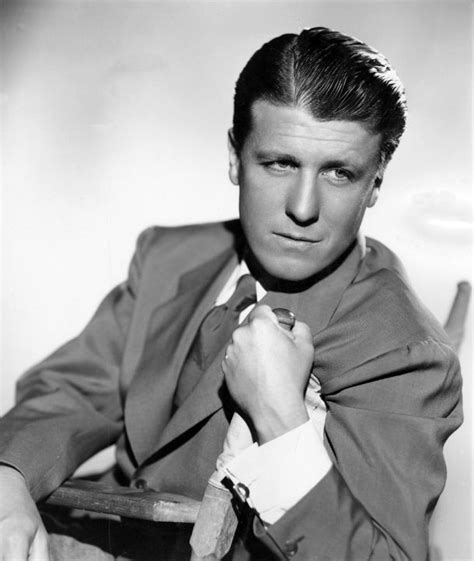
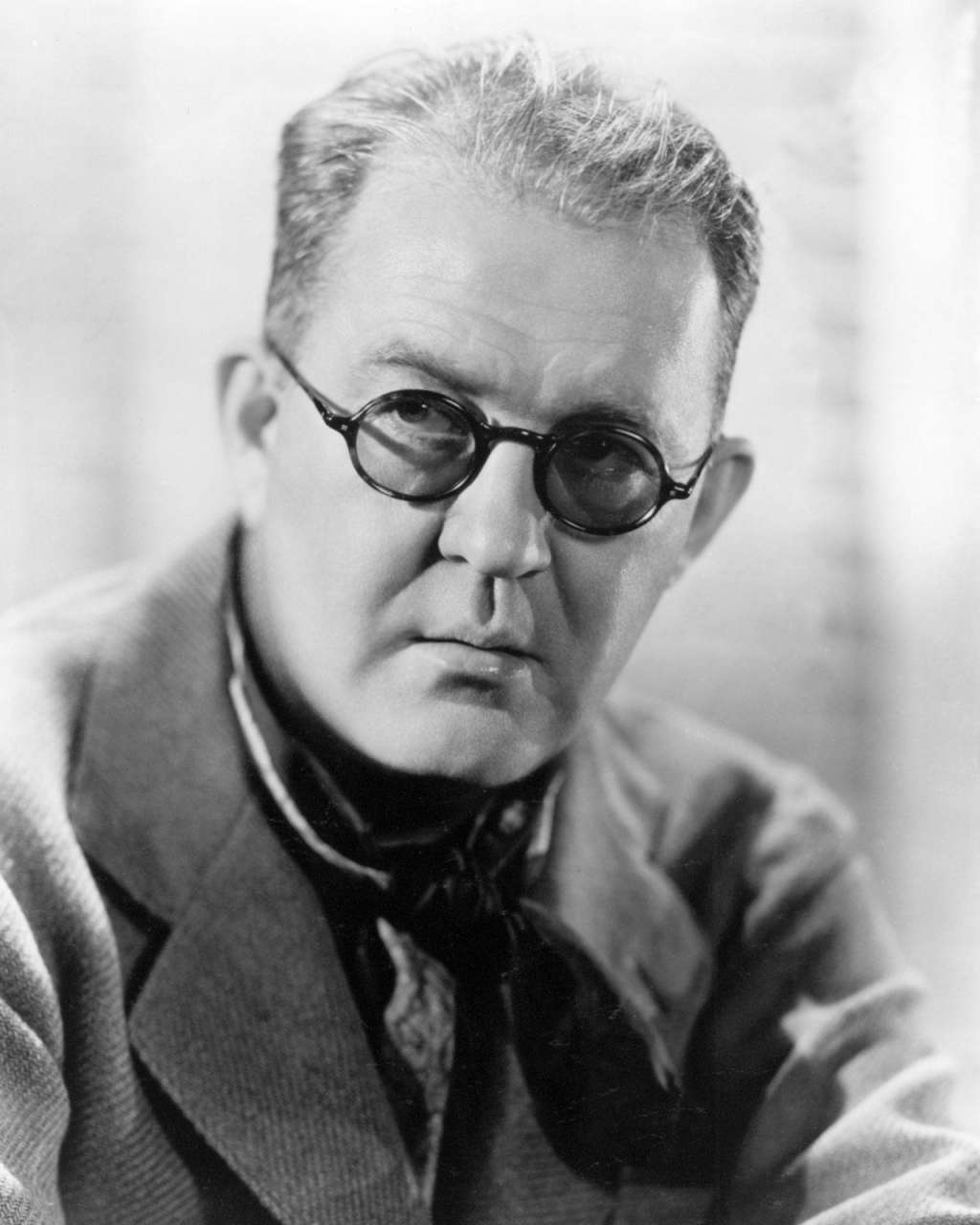
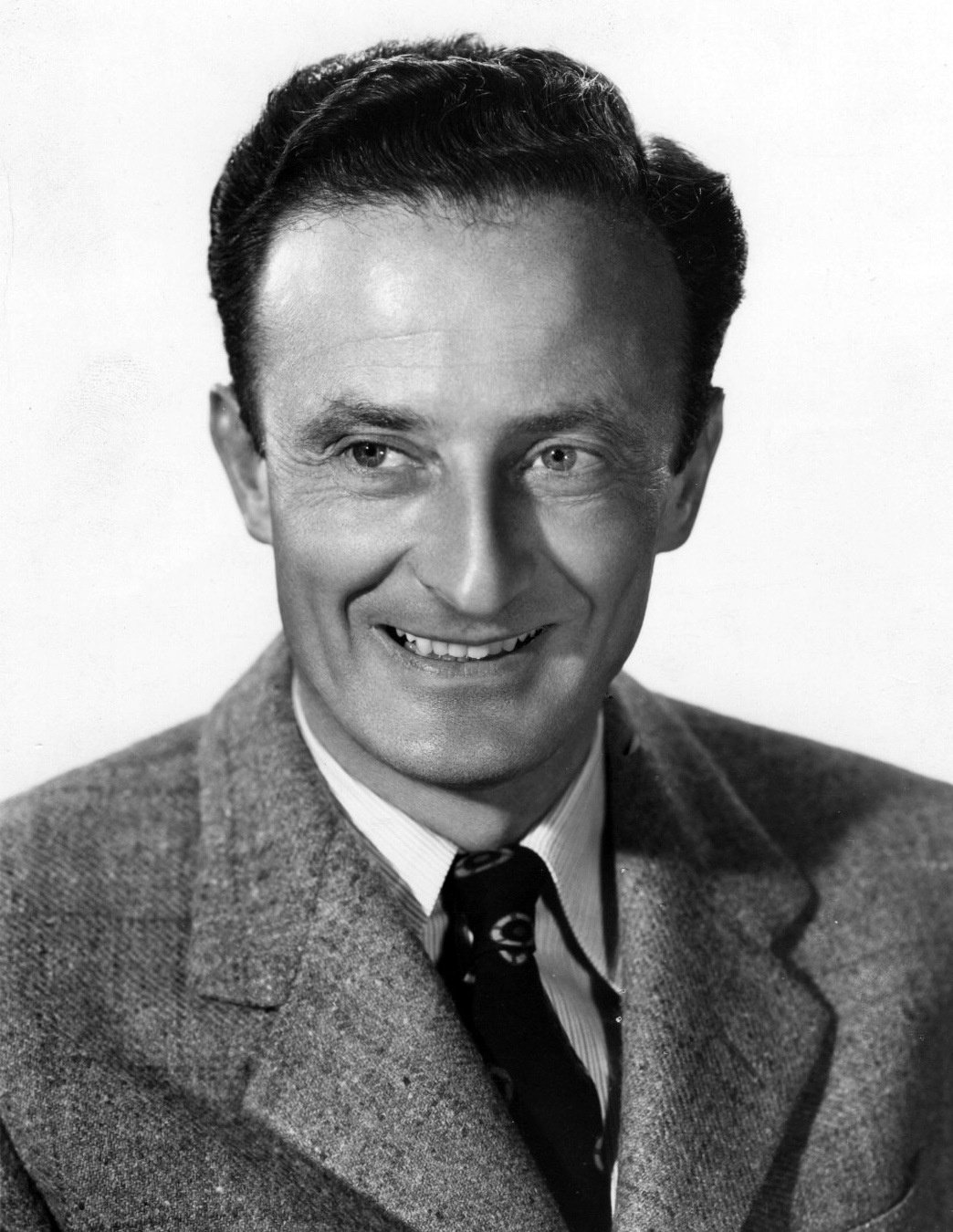
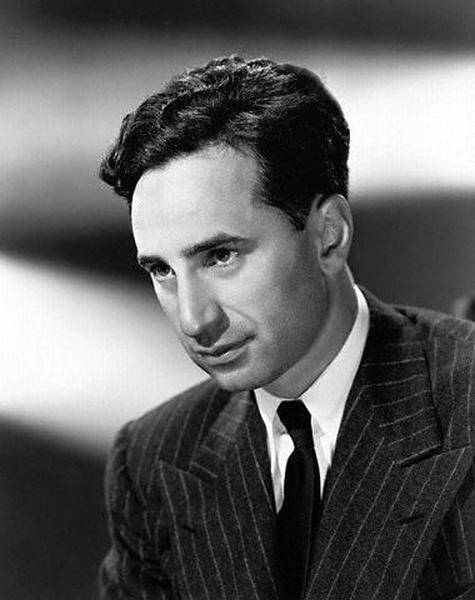
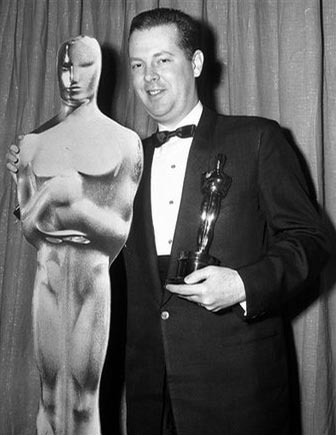
Depiction v. Endorsment
For this post, I will be discussing the film “The Departed” by Martin Scorsese. In particular, whether or not Scorsese is depicting or endorsing a certain lifestyle or point in the film. In this film, a complicated story of deception is laid out for the viewer. This is a violent film that follows three different “rats” and their respective point of view. Scorsese, I believe is simply depicting this lifestyle/story to the viewer rather than endorsing it. It is difficult to endorse a lifestyle or situation so heavily composed of lies and violence. He is depicting the difficulties both mental and physical, that undercover cops face. On the other hand, Scorsese depicts the consequences that individuals who choose a life of lies (the life of a rat) face. Scorsese is a master of cinematography and has mastered the ability to take viewers on an emotional journey while watching his films. Films such as “The Departed”, have the power to make viewers empathize with characters, etc. Scorsese is a pioneer in the film industry, and many of his films depict intriguing and conflicting situations to his viewers. This film is personally one of my favorites and is one of Scorsese’s best. While watching, I couldn’t help feel for Frank who is the “bad guy” in the film. This was a conflicting feeling for me and made me wonder is dilemmas like this is exactly what Scorsese wants his viewers to feel why watching. This effect is amplified through the specific lens through which Scorsese chooses to depict his films.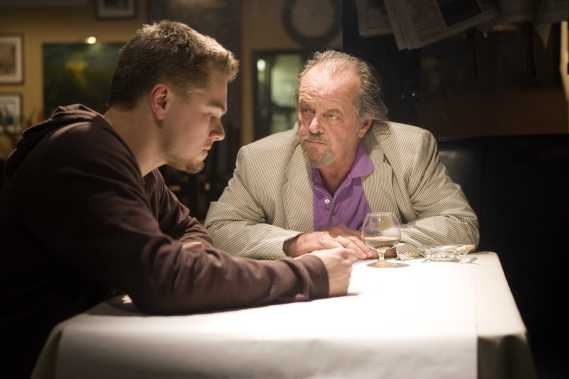
Mise en Scene


Mise en scene is the arrangement of everything that appears in the frame or shot of a film. Aspects of Mise en Scene include the actors, lighting, costume, props, camera angle, etc. Above are three screenshots of good examples of mise en scene from different films. The first is a scene from “The Pursuit of Happiness”, in this shot we see mise en scene with the choice of camera angle. The camera is looking down on Will and Jaden Smith’s character to show their vulnerability, as the two find themselves in serious adversity and mise en scene highlights this.
The second screenshot is from the move “Kingsman: Secret Service” and in this shot, we see the placement of actors being used under mise en scene. In the foreground, we see the main character with his back to the camera to kind of put the viewer in his shoes. Also, we see the immense amount of individuals in the background as well as their expressions to portray a scene of intense suspense. Adding to this, of course, is the addition of a gun as a prop visible for all actors in the shot to see.
This last shot is from Wes Anderson’s film “Moonrise Kingdom”. In this shot, we see symmetry being utilized. This aspect of mise en scene puts the actor in the middle of the frame to show the importance of the individual in the scene. This leaves the viewer to discover and be curious about the rest of the shot or what is in the background. Symmetry can be powerful in portraying complex meaning to a shot when used correctly and Wes Anderson has established himself as a master of symmetry.
 Adam Lackey's Cinema Blog